

Pro SEO Company for Advanced Crawling Strategies
Sep 26, 2026


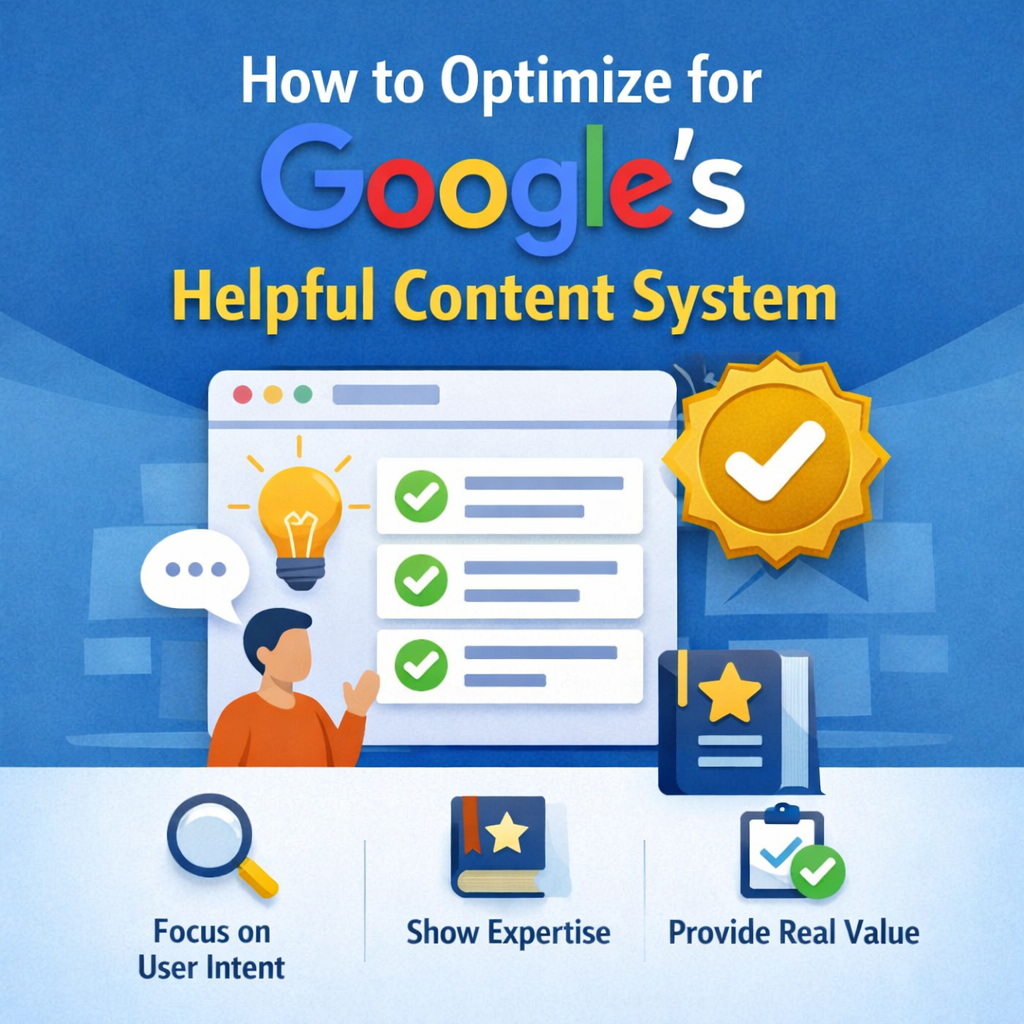
If you want your website to rank consistently and sustainably, you need to align your strategy with Google’s Helpful Content System. This system is designed to reward content that is genuinely useful, people-first, and created with real expertise. If your content exists only to attract search traffic without delivering value, it will struggle to perform.
To succeed, you must rethink how you create, structure, and present your content. This guide will walk you through exactly how to optimize for the Helpful Content System using practical, actionable steps you can apply immediately.
Before you optimize anything, you need to understand what Google considers helpful.
Helpful content is:
Unhelpful content, on the other hand, often:
Your goal is simple: ensure that when someone lands on your page, they don’t need to go back to search results.
If you want to win with the Helpful Content System, you must go beyond keywords and focus on intent.
Ask yourself:
For example, if someone searches “how to optimize content,” they don’t want a vague explanation. They want a step-by-step guide they can follow.
You should:
When you align your content with intent, you naturally improve engagement and rankings.
Google prioritizes content created by people who know what they’re talking about. You need to show experience, not just information.
Here’s how you can do that:
For instance, instead of saying “optimize your content for SEO,” explain how you’ve done it and what results you achieved.
If you want expert-level guidance and proven strategies, working with a PRO SEO Company can help you implement advanced optimization techniques that align with Google’s evolving standards.
Many people assume longer content automatically ranks better. That’s not true. Helpful content is not about length—it’s about completeness.
Your content should:
A strong structure might include:
Think of your content as a complete resource. When someone reads it, they should feel satisfied, not confused or overwhelmed.
One of the biggest mistakes you can make is writing primarily for search engines.
If your content:
…it will likely be flagged as unhelpful.
Instead, focus on:
Write as if you’re explaining something to a real person sitting in front of you. That mindset alone can dramatically improve your content quality.
Even great information can fail if it’s hard to read. You need to make your content easy to scan and understand.
Use these best practices:
Also, avoid unnecessary jargon unless your audience expects it. If you must use technical terms, explain them clearly.
Good formatting keeps users engaged—and engagement is a strong signal of helpfulness.
The Helpful Content System doesn’t just evaluate new content. It looks at your entire site.
If you have outdated or low-quality pages, they can impact your overall performance.
You should:
Refreshing content shows Google that your site stays relevant and accurate.
If you’re unsure where to start, you can always Contact Us for a detailed content audit and personalized optimization plan.
Google favors websites that demonstrate deep knowledge in a specific niche.
Instead of covering random topics, you should:
For example, if your niche is SEO, you might cover:
This creates a content ecosystem that signals expertise and authority.
User behavior plays a major role in determining whether your content is helpful.
Important engagement signals include:
To improve these, you should:
Ask yourself: “Would I stay on this page if I were the reader?” If the answer is no, improve it.
Thin content is one of the fastest ways to lose rankings.
This includes:
You should:
Quality always beats quantity when it comes to helpful content.
Your title sets expectations. If your content doesn’t deliver on those expectations, users will leave—and Google will notice.
Avoid:
Instead, write titles that:
Trust is a key factor in helpful content, and it starts with your title.
Google is getting better at identifying content that simply repeats what already exists.
To stand out, you need to:
Don’t just summarize what others have said. Build on it and make it better.
Originality is one of the strongest signals of helpful content.
Helpful content doesn’t just inform—it guides action.
Every piece of content you create should answer:
You can do this by:
The more actionable your content is, the more valuable it becomes.
Google evaluates your website as a whole, not just individual pages.
If some of your content is high-quality but other parts are weak, it can hurt your rankings.
You should:
Consistency builds trust—with both users and search engines.
Optimizing for Google’s Helpful Content System is not about tricks or shortcuts. It’s about creating content that genuinely serves your audience.
When you:
…you naturally align with what Google wants.
The key is to think long-term. Instead of chasing rankings, focus on helping people. Rankings will follow.
If you’re serious about improving your content strategy and staying ahead of algorithm changes, partnering with a PRO SEO Company can give you the expertise and direction you need.
And if you’re ready to take the next step, don’t hesitate to Contact Us to start building content that truly performs.
Frequently Asked Questions (FAQs)