

Pro SEO Company for Advanced Crawling Strategies
Sep 26, 2026


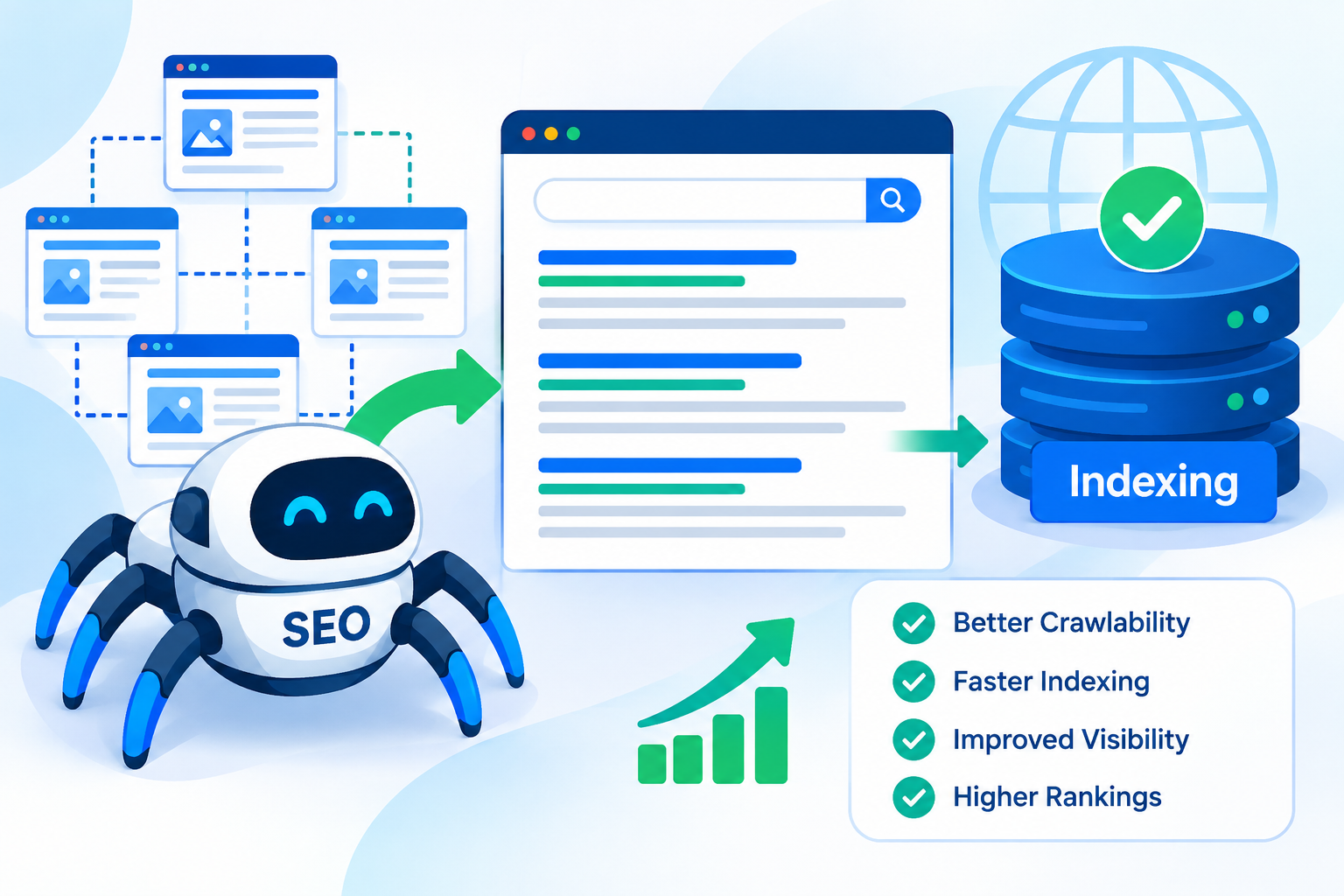
Your website can contain valuable pages, useful information, and strong services, but search engines cannot rank pages they cannot properly discover, crawl, and index. Crawlability and indexing form the technical foundation of your organic search visibility. When these areas are neglected, important pages may remain invisible even when your content is relevant and well written.
Working with a PRO SEO Company can help you identify technical barriers, improve how search engines access your website, and create a cleaner path from crawling to indexing. You can also use regular technical monitoring to prevent new issues from weakening your visibility over time.
Crawlability refers to how easily search engine crawlers can access and navigate the pages on your website. Indexing happens when a search engine processes a crawled page and considers it for inclusion in its search index.
Think of the process as a sequence:
Discovery → Crawling → Processing → Indexing → Ranking
If a problem occurs early in this process, it can affect everything that follows. For example, a page blocked by robots.txt may not be crawled as intended. A page with a noindex directive may be crawled but excluded from the search index.
You should therefore treat crawlability and indexing as separate but connected technical SEO priorities.
Search engines use automated crawlers to discover website content. Your site structure helps those crawlers understand which pages are available and how they relate to one another.
Poor crawlability can result from:
When these issues accumulate, crawlers may spend time accessing low-value or duplicate URLs instead of efficiently discovering important pages.
You can improve crawlability by creating a logical site structure, maintaining useful internal links, fixing broken pages, and keeping technical directives accurate.
A technical SEO professional begins by examining how search engines interact with your website. Instead of focusing only on keyword rankings, you can evaluate the technical pathways that allow search engines to discover and process your content.
A crawlability review may include:
Your website should have a clear hierarchy. Important service, product, category, and location pages should be accessible through logical navigation and contextual internal links.
You can organize pages into meaningful groups and avoid creating unnecessarily deep navigation paths.
Internal links help users move between related pages while also providing search engines with additional discovery paths.
You should link relevant pages using descriptive anchor text. For example, instead of using vague phrases such as “click here,” use meaningful descriptions that explain the destination page.
This approach supports usability, topical relationships, and search engine understanding.
Your robots.txt file can influence crawler access to specific areas of your website. An incorrect directive can unintentionally restrict important resources or URLs.
You should regularly review the file after major website changes, migrations, redesigns, or platform updates.
Remember that robots.txt is primarily a crawling directive. It should not be treated as a universal method for removing pages from search results.
An XML sitemap gives search engines a structured list of URLs you want them to discover.
Your sitemap should generally contain canonical, indexable URLs that return successful responses. Remove outdated, redirected, duplicate, or intentionally excluded URLs where appropriate.
After major changes, check whether your sitemap accurately reflects your current website structure.
Redirects are useful when URLs change, but excessive redirect chains can make crawling less efficient.
You should check for:
Where possible, point old URLs directly to their most relevant final destinations.
Crawlability does not automatically guarantee indexing. Search engines evaluate many signals before deciding whether a URL should be included in their index.
Common indexing problems include:
You should investigate these issues systematically rather than making random changes.
For example, if an important service page is not indexed, first determine whether search engines can crawl it. Then check its HTTP status, robots directives, canonical tag, internal links, sitemap presence, and content quality.
This process helps you identify the actual cause instead of treating the symptom.
Canonical tags help communicate which URL should be considered the preferred version when similar or duplicate URLs exist.
For example, your website might generate several URL variations for the same content because of parameters, filters, tracking elements, or platform settings.
A technical SEO review should check whether canonical tags:
Canonicalization is a signal rather than a guarantee. Search engines may select a different canonical when other signals conflict.
Modern websites often rely heavily on JavaScript. While search engines can process JavaScript, technical implementation can still create discovery and rendering challenges.
Important content should not depend unnecessarily on complex client-side processes that prevent reliable discovery.
You can improve technical accessibility by:
This is particularly important for large websites, ecommerce platforms, web applications, and websites that frequently publish new content.
Large websites require additional attention because they may contain thousands or millions of URLs.
You should prioritize valuable, indexable URLs and reduce unnecessary crawling paths.
Common areas to review include:
A technical SEO audit can help you distinguish URLs that deserve search visibility from those that create unnecessary complexity.
If you serve customers in specific cities or regions, crawlability and indexing also support your local SEO strategy.
Your important location pages should be discoverable, internally linked, technically accessible, and useful to visitors. Each location page should provide genuinely relevant information rather than repeating nearly identical text across multiple cities.
You can strengthen local visibility by maintaining consistent business information, developing useful location-focused content, and connecting relevant service and location pages through your internal linking structure.
For businesses serving multiple locations, your technical SEO strategy should make the relationship between services, locations, and supporting content easy to understand.
Search visibility now extends beyond traditional blue-link results. AI-generated search experiences can use website content to answer questions and provide references.
That makes technically accessible content increasingly important.
Your pages should provide clear answers, logical headings, useful supporting information, and consistent terminology. Structured data can also help search engines understand entities, services, organizations, products, and other page elements when implemented correctly.
For AEO and GEO, focus on making your content:
Technical accessibility does not guarantee AI citations or traditional rankings, but it provides a stronger foundation for search systems to access and interpret your content.
Technical SEO should not be a one-time project. Websites change continuously, and new problems can appear after redesigns, plugin updates, migrations, content publishing, or development work.
You can establish a recurring monitoring process that checks:
Search Console data can help you investigate indexing and page-level issues. A crawler can provide a broader technical view across your website.
You may benefit from professional assistance when indexing problems continue despite basic fixes or when your website has become technically complex.
Consider an expert technical review after:
A PRO SEO Company can help you prioritize issues according to their potential technical impact rather than attempting to fix every warning at once.
Your SEO strategy becomes more reliable when technical foundations support your content strategy. Start by making important pages accessible, maintaining a logical site architecture, keeping XML sitemaps accurate, checking canonical signals, fixing broken links, and monitoring indexing changes.
You should also review crawlability whenever your website undergoes significant technical changes. Early detection can prevent small configuration errors from affecting large sections of your website.
If you need help identifying technical barriers, reviewing indexing problems, or creating a structured SEO improvement plan, use SEO technical audit support to explore professional assistance. For questions about your website’s specific crawlability or indexing requirements, you can also Contact Us for further guidance.
Crawlability and indexing are essential parts of sustainable search visibility. Your website needs to be accessible to search engines before your content can consistently participate in organic search.
By improving site architecture, internal linking, robots.txt directives, XML sitemaps, redirects, canonical signals, JavaScript accessibility, and technical monitoring, you can create a cleaner search engine discovery process.
A structured approach also supports AEO, GEO, and local SEO by helping search systems access and understand your most important pages. Instead of treating technical SEO as a one-time task, make crawlability and indexing part of your ongoing website maintenance strategy.
Crawlability describes how easily search engine crawlers can access and navigate your website’s pages, links, resources, and content.
Common causes include noindex directives, canonical conflicts, duplicate content, server errors, blocked resources, poor internal linking, and low-quality or inaccessible pages.
An XML sitemap provides search engines with a structured list of important URLs, helping them discover pages that you want crawled and considered for indexing.
Robots.txt can restrict crawling, but it is not a dependable method for removing a URL from search results. Indexing controls should be handled appropriately for the specific situation.
You should monitor important indexing signals regularly and conduct deeper reviews after migrations, redesigns, CMS changes, major technical updates, or unexpected organic traffic changes.