

Pro SEO Company for Advanced Crawling Strategies
Sep 26, 2026


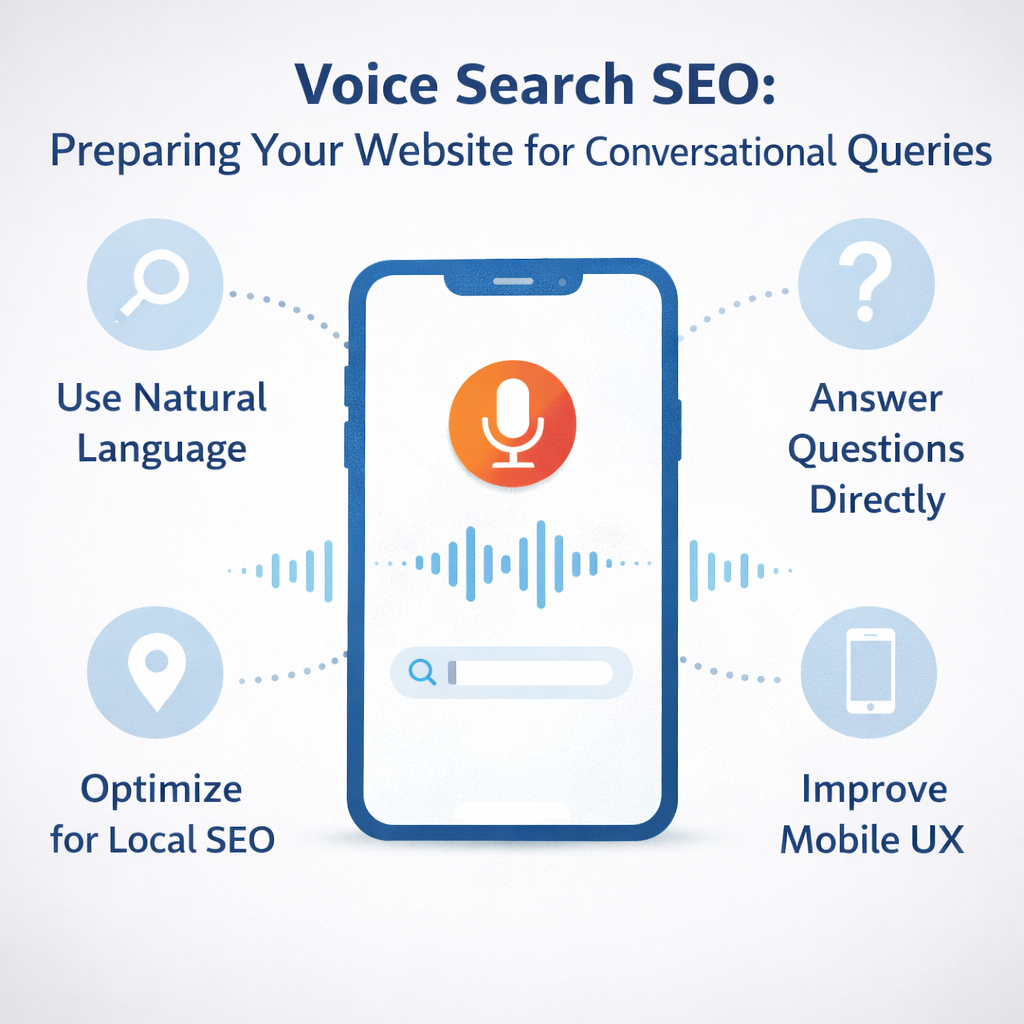
Search is no longer limited to typing keywords into a box. You’re now living in an era where people speak to their devices as naturally as they talk to friends. From asking for nearby restaurants to solving complex queries, voice search is reshaping how users interact with the web—and how you must optimize your website.
If you want to stay ahead, you need to understand how conversational queries work and how to align your SEO strategy accordingly. This guide walks you through exactly how to prepare your website for voice search, step by step.
When users type, they tend to use short, fragmented keywords like “best SEO tips.” But when they speak, they use full sentences such as, “What are the best SEO tips for beginners?”
This shift means you must rethink how you approach content.
Voice searches are:
To adapt, you need to move from keyword stuffing to intent-focused optimization.
You should start by identifying how your audience actually speaks. Instead of targeting rigid keywords, aim for natural language phrases.
For example:
You can uncover these phrases by:
As you create content, incorporate these conversational phrases naturally into headings and paragraphs.
Voice searches are heavily driven by questions. That means your content should directly answer them.
You can do this by:
For example, if you’re offering SEO services, you might include a section answering:
“What does a professional SEO company do?”
Within that content, you can naturally guide users toward your services by referencing a trusted PRO SEO Company that delivers measurable results.
When users perform a voice search, devices often pull answers from featured snippets (position zero in search results). If your content appears there, you significantly increase your visibility.
To improve your chances:
For example:
What is voice search SEO?
Voice search SEO is the process of optimizing your website to appear in voice-based search results by focusing on conversational keywords, structured content, and user intent.
This format makes it easier for search engines to extract and read your content aloud.
Most voice searches happen on mobile devices. If your site isn’t mobile-friendly, you’re already behind.
You should ensure:
Google prioritizes mobile-first indexing, so your mobile experience directly impacts your rankings.
Speed is critical. Voice search users expect instant answers, and search engines favor fast-loading websites.
To improve your page speed:
Even a one-second delay can reduce user satisfaction and hurt your rankings.
A large percentage of voice searches are local. People often ask questions like:
To capture this traffic, you need to optimize for local SEO.
Key steps include:
When users search locally, your optimized presence can position you as the go-to PRO SEO Company in your area.
Structured data helps search engines better understand your content. It plays a crucial role in voice search optimization.
You should implement schema markup for:
This increases your chances of being selected as a voice search result
Voice search is all about natural language. If your content sounds robotic, it won’t perform well.
You should:
Think of your content as a conversation, not a lecture.
Understanding intent is essential. Every voice query has a purpose, such as:
You should align your content with these intents.
For transactional queries, guide users toward action by encouraging them to Contact Us for personalized solutions and expert assistance.
Voice searches naturally include long-tail keywords. These are less competitive and more specific, making them valuable for targeting niche audiences.
Instead of:
You should target:
Long-tail keywords help you capture highly relevant traffic that is more likely to convert.
Search engines prioritize websites that deliver a great user experience.
To improve UX:
When users find your content helpful and easy to consume, they stay longer—boosting your SEO performance.
Voice assistants prefer authoritative sources. If your website is seen as credible, your chances of being selected increase.
You can build authority by:
Position yourself as an industry expert so both users and search engines trust your information.
Voice search SEO is not a one-time effort. You need to track performance and adapt continuously.
Key metrics to monitor:
Use tools like Google Analytics and Search Console to identify opportunities and refine your approach.
Voice search is only going to grow. As AI assistants become more advanced, conversational queries will become even more complex and personalized.
To stay ahead:
Businesses that adapt early will gain a significant competitive advantage.
Preparing your website for voice search isn’t just a trend—it’s a necessity. By optimizing for conversational queries, improving user experience, and focusing on intent-driven content, you position your brand for long-term success.
Start by understanding how your audience speaks, then align your content to meet those expectations. Whether you’re aiming to rank higher, attract more qualified traffic, or increase conversions, voice search SEO can help you achieve your goals.
And if you’re ready to take your strategy to the next level, partnering with a reliable PRO SEO Company can accelerate your results. When you’re prepared to grow, don’t hesitate to Contact Us and transform your website into a voice search–optimized powerhouse.